Map the run and the weak points first
- Where does the line break for gates and deliveries, and what’s the turning radius there?
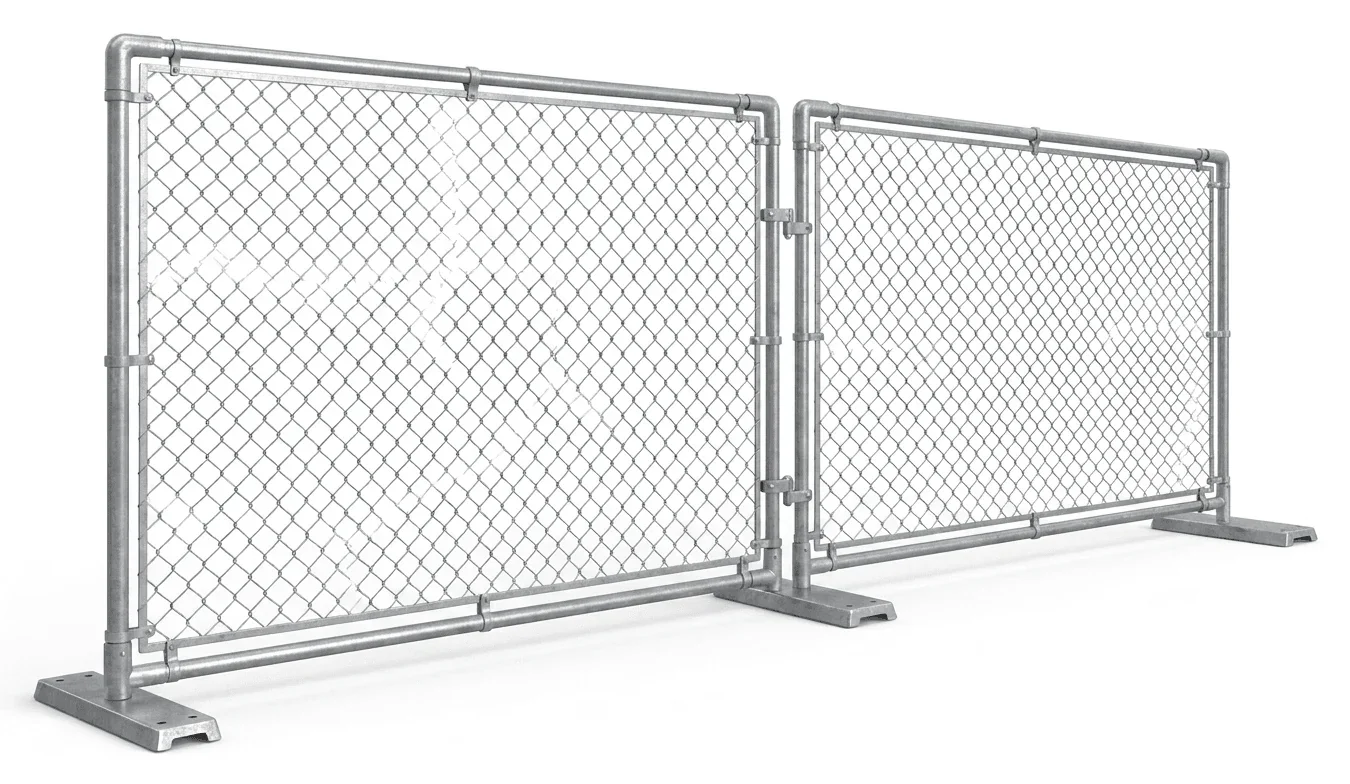
- Will panels sit on slab, compacted aggregate, or native clay? Each changes base choice and site-stability factors needs.
- Do work zones require overnight visibility? Pairing with /generators-light-towers-rental/ can improve sightlines at staging areas.
Local soil and weather implications
Expansive clay typical of the area resists drainage and becomes slick after rain. Panel feet can tilt or sink on soft spots, especially along long, straight runs that catch wind. Plan for terrain transitions at curbs and swales, and expect releveling based on actual conditions and the selected system’s instructions and site procedures.
Barricades inside large facilities
For interior routes around maintenance projects in tall buildings, low-profile barricades help maintain aisles near active production lines. If overhead access is part of the work, coordinate barricade placement with lift staging from /electric-scissor-lift-rental/ or /vertical-mast-lift-rental/ to keep approach paths clear.
Gate and corner planning
- Concentrate site-stability factors or anchor options where trucks swing wide.
- Use staggered sections at corners on mixed surfaces to reduce creep.
- Maintain setbacks from utilities and overhead lines per site procedures.
Quick checklist
- Surface type along entire run and any wet areas after storms
- Gate widths, delivery schedules, and turning radii
- Night visibility requirements and nearby lighting
- Interfaces with containers, lifts, and material flows
For adjacent site needs, see /storage-containers-rental/ and the broader overview at /products/. Coordinate specifics through /contact/.