Start with where the lift will sit
- Can the machine sit directly below the task? If yes, a scissor lift with straight-up travel is efficient. If not, an aerial boom may be required. See options under /aerial-lift-rental/.
- Measure working height and add clearance for fixtures, ducts, or racks common to local distribution buildings and industrial sites.
Indoor facilities around Montgomery
Electric slab scissor lifts fit the smooth, finished floors found in manufacturing areas, data halls, and commercial maintenance spaces. Low-noise electric drives and tight turning help in aisles and between production lines. Focus on: - Platform height range versus ceiling elevation and obstructions - Machine width for doorways, mezzanine gates, and rack spacing - Floor loading limits in older structures
See /electric-scissor-lift-rental/ for a deeper comparison of compact and standard slab models.
Outdoor and mixed-surface work in the Alabama Black Belt
Expansive clay soils in the region resist drainage. After rain, surfaces that look firm can pump and shear, creating slick top layers and soft pockets. That shifts the decision toward rough-terrain scissor lifts with: - Wider wheelbase and higher ground clearance - All-terrain tires and 4WD for unfinished sites - Outriggers or leveling systems where specified by the model
Explore /rough-terrain-scissor-lift-rental/ to weigh tire type, grade tolerance, and platform size.
When a scissor isn’t the right geometry
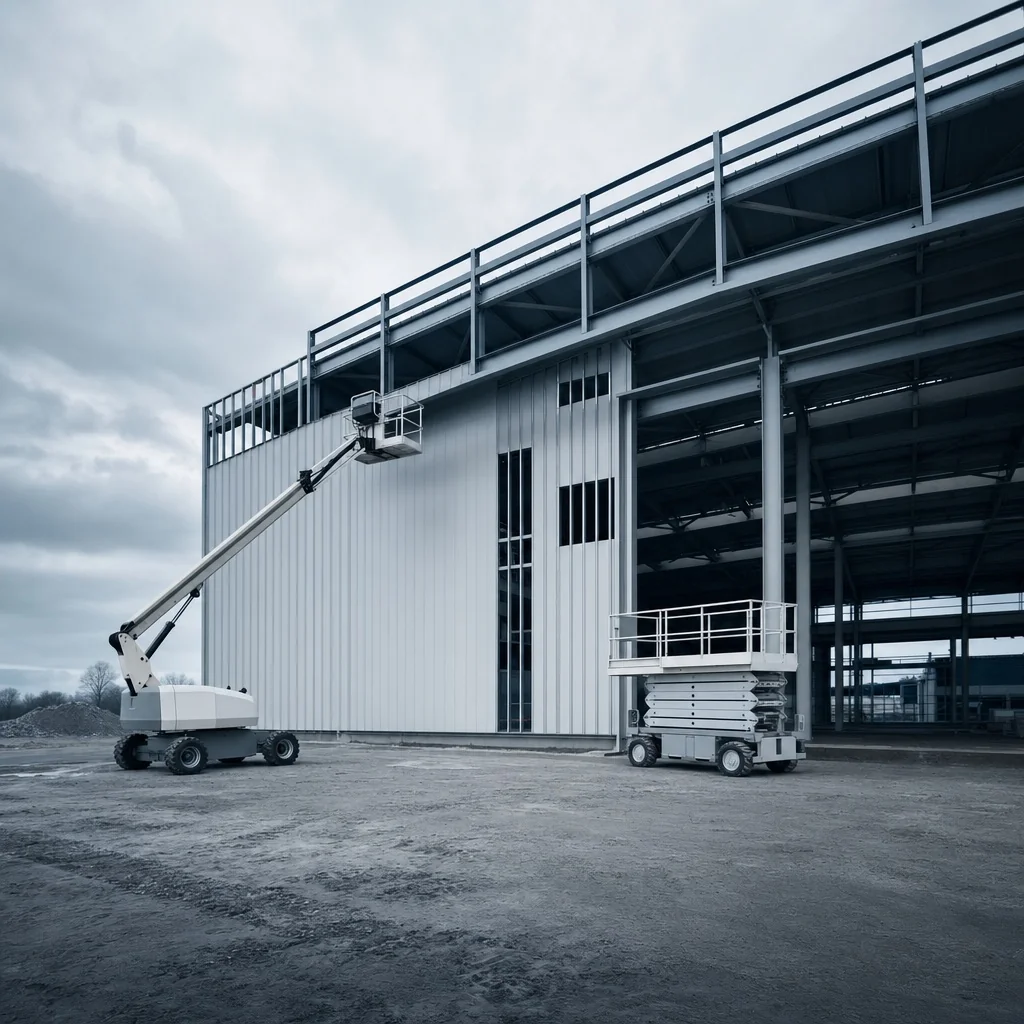
If the task is offset from the machine’s footprint—over conveyors, equipment, or landscaping—articulating or telescopic booms provide up-and-over or straight outreach. Compare choices at /boom-lift-rental/ and /aerial-lift-rental/.
Planning notes for Montgomery projects
- Expect frequent heavy rain; schedule around drying time for outdoor slabs and soils.
- For tight industrial aisles, confirm machine width and turning radius against layout drawings.
- For exterior maintenance on paved lots, verify the condition of patches and transitions that can trap casters.
Actual conditions, the selected unit’s instructions, and site procedures govern elevated work.