Start with the landing zone
- Access route: Measure gate widths, turning radius, overhead clearances, and any tight bends along docks or service lanes.
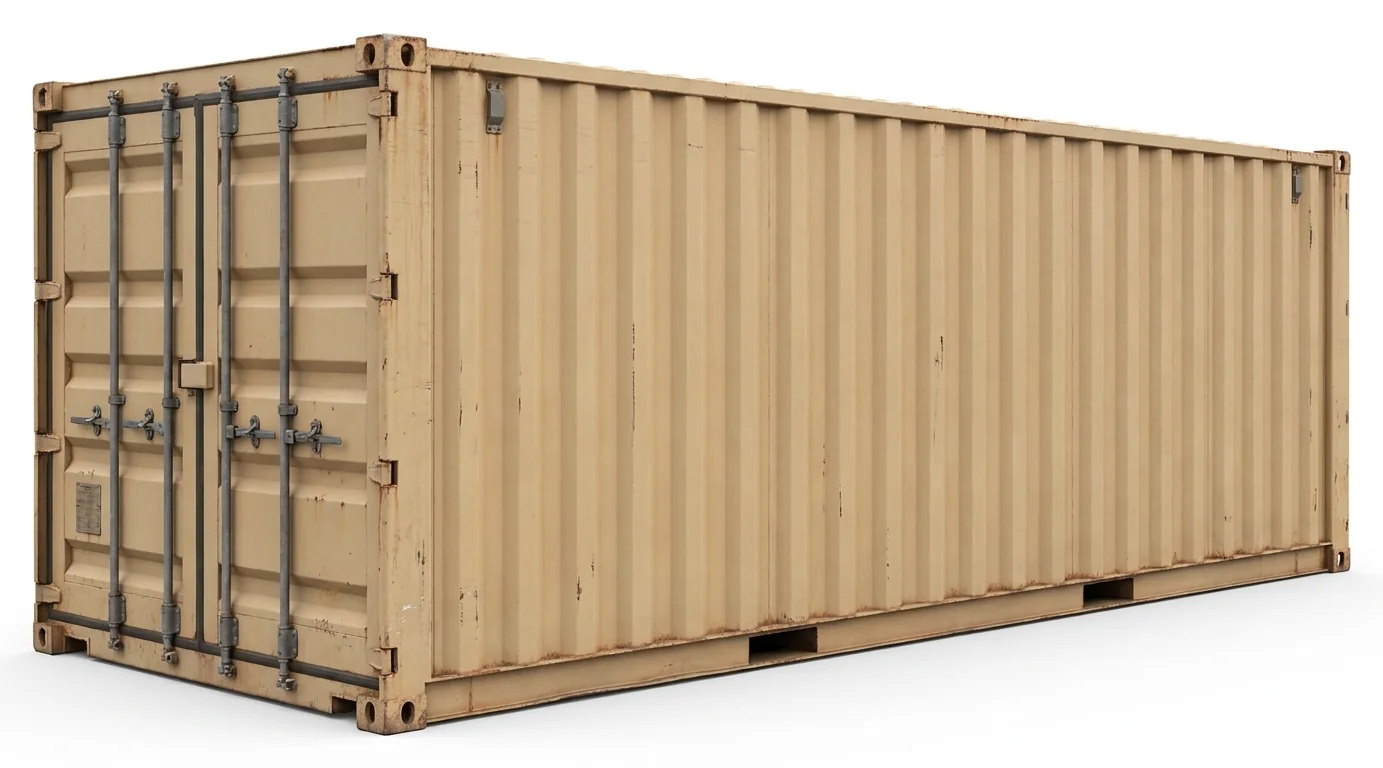
- Set-down surface: Paved slabs and compacted aggregate resist rutting. Native clay can soften after storms, which may twist the container and misalign doors.
How local ground and weather shape the plan
Expansive clay common in the area sheds water slowly. After heavy rain, a loaded container can settle unevenly. If storage must sit on native soil, plan enough space for cribbing or a prepared pad so the base stays true and doors track properly. Placement slightly upslope of drainage paths reduces pooling at the threshold.
Container format and task pattern
- Door access: Frequent pick-and-pack around manufacturing means roll-up or wide double doors can speed cycles. Confirm aisle space for full door swing if using hinged styles.
- Size vs. reach: Larger boxes cut trips but demand straighter approaches and more stable ground for delivery equipment.
- Security and lighting: Perimeter lighting and sightlines matter near active yards; pairing with /generators-light-towers-rental/ can cover night shifts.
Interactions with lift equipment
Moving heavy parts in and out often involves material handlers. On smooth interior aprons, /forklift-rental/ may handle pallets efficiently. For uneven exterior yards, /telehandler-rental/ offers ground clearance and reach to place loads without driving onto soft spots.
Quick site checklist
- Approach: width, overhead obstructions, slope changes
- Ground: paved vs. clay, recent rainfall, drainage direction
- Operations: door frequency, pallet size, and lift type used
- Duration: short project staging vs. multi-season storage
Cross-check other site products at /products/ or coordinate a walk-through via /contact/.