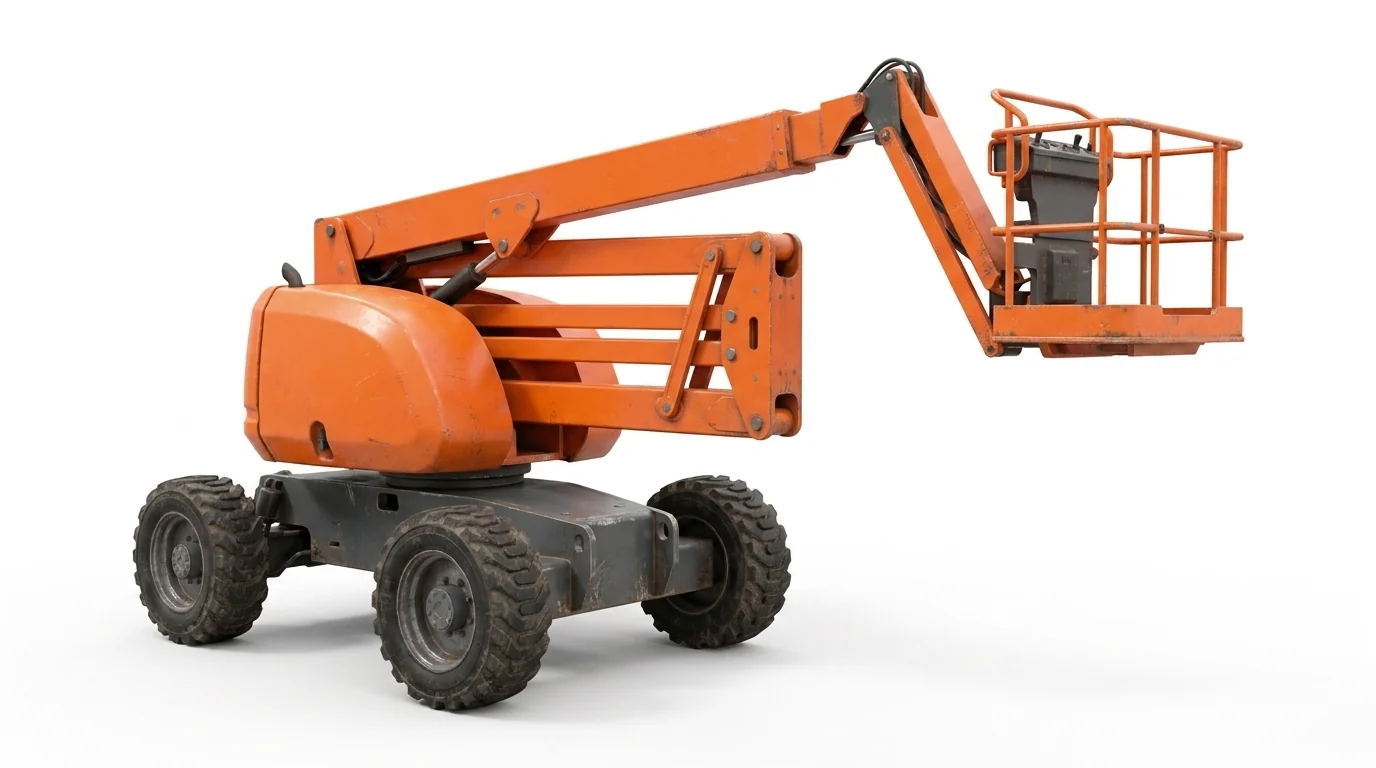
When an articulating boom makes sense
- Obstructions under the target: mezzanines, production lines, pipe racks, or canopies.
- Need to position beside or behind an object without driving underneath.
- Varied ceiling heights where you must clear one level, then descend to the task plane.
For indoor tasks, electric articulating models with non-marking tires fit slab conditions and ventilation requirements. For exterior or mixed-use projects, engine-powered units handle uneven approaches and long duty cycles.
Local ground and weather factors
Montgomery’s humid subtropical weather and clay-heavy soils can leave exterior surfaces slick or soft after rain. That matters when the lift must track across unpaved staging areas to reach a concrete apron or loading face. On those days, a rough-terrain package with 4WD and larger tires is typically compared against staying entirely on slab with an electric unit staged from a paved route. Actual site procedures and the selected unit’s instructions govern what is acceptable.
If your approach path is all interior slab, an electric articulating boom often complements an electric scissor for vertical tasks. If the route crosses compacted clay or mixed gravel, evaluate rough-terrain scissor versus an RT articulating boom based on turning room and obstacle height.
Measurements that narrow the choice
- Horizontal reach to the work face measured from safe machine position.
- Up-and-over clearance: the height you must clear before reaching back down.
- Platform capacity for people and tools.
- Aisle and doorway widths along the route; note any slope transitions or thresholds.
- Surface type along the entire path: interior slab, paving, gravel, or exposed soil.
Articulating vs. telescopic on Montgomery sites
Straight booms simplify long, unobstructed reaches, especially outdoors. Articulating booms excel when you have to snake around building systems or load zones. For exterior maintenance next to landscaped clay soils that hold water, the ability to set up on paving and reach over soft ground can reduce ground-bearing demands compared to driving directly across it. Compare with telescopic options when the approach is clear.
Related planning
- Mixed fleets for shutdowns: pair articulating booms for obstruction zones with forklifts or telehandlers for parts handling.
- Power and lighting: see generators and light towers if night work or standby charging is expected.